
Aviation 2026: 7 Ground Handling Trends That Will Redefine Airport Operations
By 2026, global passenger numbers are expected to reach new records and airport infrastructure will be under more pressure than ever. At the same time, the aviation industry is racing to decarbonise, automate and standardise its operations.
Nowhere is this transformation more visible than on the apron and around the aircraft turnaround.
Ground handling is shifting from a purely operational function to a strategic capability that directly impacts on-time performance, safety, emissions and customer experience.
In this article, we explore seven key trends that will define ground handling in 2026, and how airports, handlers and OEMs can turn them into a competitive advantage.
🔹 Trend 1 – Safety & global standards 2.0
🔹 Trend 2 – Automation, AI & data-driven turnarounds
🔹 Trend 3 – Electrification of GSE & energy transition
🔹 Trend 4 – Integrated ground power architectures
🔹 Trend 5 – Workforce, skills & safety culture
🔹 Trend 6 – Sustainability as a Core Operational Metric
🔹 Trend 7 – Resilience, Redundancy & Future-Proof Design
🔹 Action checklist for 2026
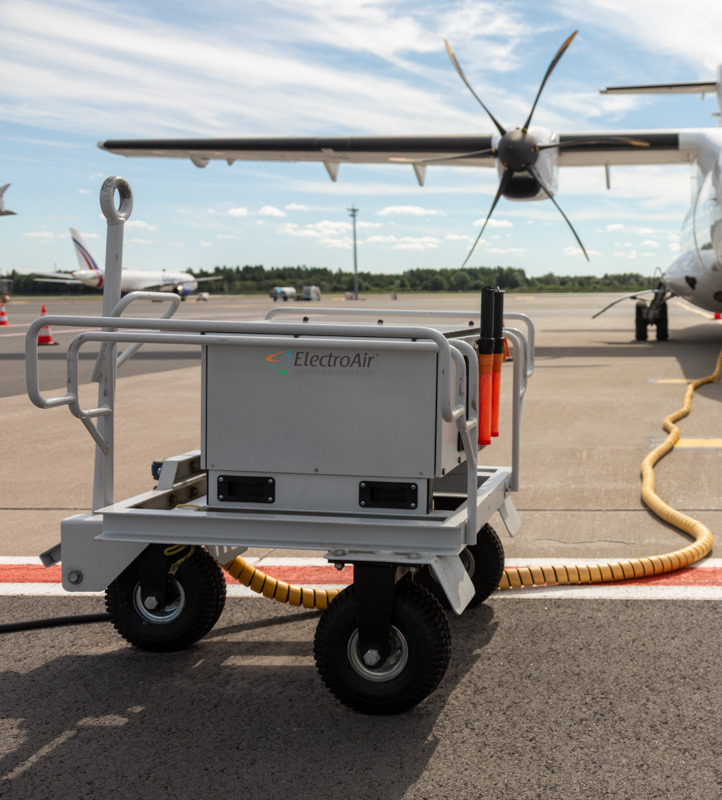
Why 2026 Is a Turning Point for Ground Handling
Traffic recovery has not just brought airports back to pre-pandemic volumes; in many regions it has pushed them beyond previous peaks.
At the same time, labour costs, skills shortages and supply chain disruption are making it harder to maintain traditional, labour-intensive turnaround models. Ground handling organisations are being asked to do more, with fewer people, tighter margins, and stronger environmental requirements.
The result is a structural shift. Leading airports and handlers are no longer treating ramp operations as a collection of separate tasks and vehicles. Instead, they are building integrated operational ecosystems where safety standards, digital data flows, energy infrastructure and human factors are managed together. 2026 will be the year where these initiatives move from pilot projects to mainstream deployment.
Trend 1 – Safety & Global Standards 2.0
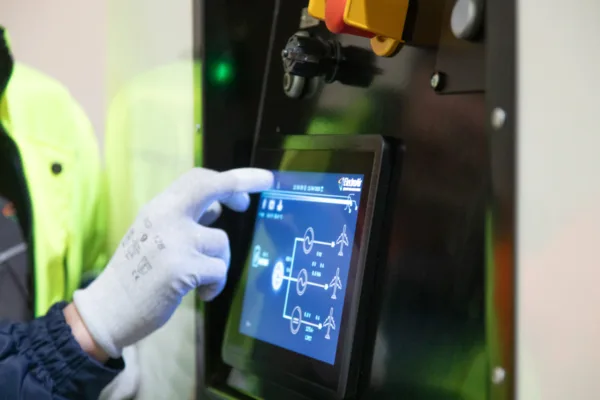
Safety has always been the foundation of ground operations, but the complexity of today’s environment is driving a new wave of standardisation. Industry bodies are urging the sector to embed safety in every action, accelerate adoption of global standards such as the IATA Ground Operations Manual (IGOM) and Airport Handling Manual (AHM), and integrate these into local procedures and training programmes.
In practice, this means:
- Digital checklists and standard operating procedures (SOPs) on handheld devices.
- Systematic data capture of safety events, near-misses and equipment damage.
- Closer coordination between airlines, airports, ground handlers and OEMs to reduce procedural fragmentation.
For equipment suppliers, this is reshaping product design. GPUs, PIT systems and PCA units are expected to support safe operations by design, with features such as guided connection, interlocks, monitoring and event logging built in from the factory.
Trend 2 – Automation, AI & Data-Driven Turnarounds
Automation is moving from the baggage hall and back office onto the apron itself. Autonomous tugs and baggage tractors, computer-vision-based stand guidance, and AI-powered turnaround management platforms are increasingly part of daily operations rather than future concepts.
By 2026, many major hubs are expected to have at least partial automation in ramp or baggage handling, with AI systems orchestrating the flow of people and assets around the aircraft stand. Instead of static schedules, ground handling teams will rely on real-time predictive decision-making that can identify risks, a late catering truck, a missing belt loader, an incompatible GPU, before they become delays.
For ground power, this means GPUs and PIT systems will increasingly be connected to central platforms that track usage, measure performance and feed data into airport-wide dashboards. Equipment that cannot be monitored, diagnosed or controlled remotely will quickly feel outdated.
Trend 3 – Electrification of GSE & the Energy Transition
Electrification is no longer a niche initiative; it is becoming the default choice for new ground support equipment.
Airports are ramping up programmes to replace diesel GPUs, belt loaders, tugs and buses with battery-electric or hybrid alternatives, supported by new charging infrastructure at stands, depots and maintenance areas.
The drivers are clear:
- Lower emissions and noise to support airport net-zero roadmaps.
- Reduced operating costs compared to diesel, especially as carbon and fuel prices rise.
- Improved reliability thanks to fewer moving parts and better diagnostics.
The challenge for 2026 is not whether to electrify, but how to do so intelligently: sizing charging networks, planning peak loads, integrating renewable sources, and balancing electric, hybrid and fixed infrastructure such as central 400 Hz systems and PCA.
Trend 4 – Integrated Ground Power Architectures
Historically, many airports built up their ground power capabilities step by step: a mix of mobile diesel GPUs, a few fixed points, perhaps a handful of PIT systems added during apron refurbishments. As a result, energy flows on the apron are often fragmented and difficult to manage.
In 2026, more projects are moving towards holistic ground power architectures, where PIT systems, fixed 400 Hz converters, bridge-mounted GPUs, PCA units and backup solutions are designed as one coherent system.
Key characteristics of this approach include:
- Clean stands with minimal cable clutter and optimised hose and cable management.
- Centralised monitoring of all power points, including energy metering and event logging.
- Built-in redundancy and modularity, allowing stands and gates to be upgraded without redesigning the entire network.
- Seamless integration with A-CDM and airport management systems for better turnaround visibility.
For ElectroAir and other infrastructure providers, this shift favours turnkey projects where engineering, equipment and commissioning are delivered together, rather than as separate procurement lots.
Trend 5 – Workforce, Skills & Safety Culture
Even the most advanced technology depends on people. Labour shortages, changing demographics and the increasing technical complexity of GSE are reshaping the ground handling workforce.
Airports are investing heavily in reskilling programmes, turning diesel mechanics into high-voltage and power-electronics specialists, and training ramp staff to work safely around electric vehicles, charging points, hydrogen systems and automated equipment.
New certifications and manufacturer training schemes are emerging that focus on integrated systems rather than individual units.
At the same time, safety culture is evolving. Data from wearables, telematics and equipment sensors allows managers to move from reactive incident reporting to proactive risk management, focusing attention and training where it is needed most.
Trend 6 – Sustainability as a Core Operational Metric
Net-zero commitments are no longer just corporate slogans; they are now being translated into procurement rules, concession agreements and airport master plans. Ground handling is under particular scrutiny because it is one of the most visible sources of local emissions and noise.
For 2026, this means that sustainability metrics, such as CO₂ per turnaround, percentage of APU-off operations, or share of electric GSE utilisation, will increasingly sit alongside on-time performance and cost in management dashboards. Airports and handlers that can prove measurable reductions will have an advantage in tenders and airline negotiations.
Trend 7 – Resilience, Redundancy & Future-Proof Design
Finally, the last few years have highlighted how vulnerable aviation can be to disruption, from supply chain bottlenecks and weather extremes to geopolitical shocks. Ground handling strategies for 2026 are therefore placing much more emphasis on operational resilience.
In infrastructure terms, this translates into:
- Redundant power paths and backup ground power options at critical stands.
- Modular systems that can be expanded as traffic grows or airline mixes change.
- Standardised interfaces that avoid lock-in to a single vendor or technology generation.
- Remote diagnostics and predictive maintenance to keep fleets available even when spares are scarce.
The airports that plan for disruption, rather than simply reacting to it, will be those that maintain stable, predictable operations as the industry evolves.
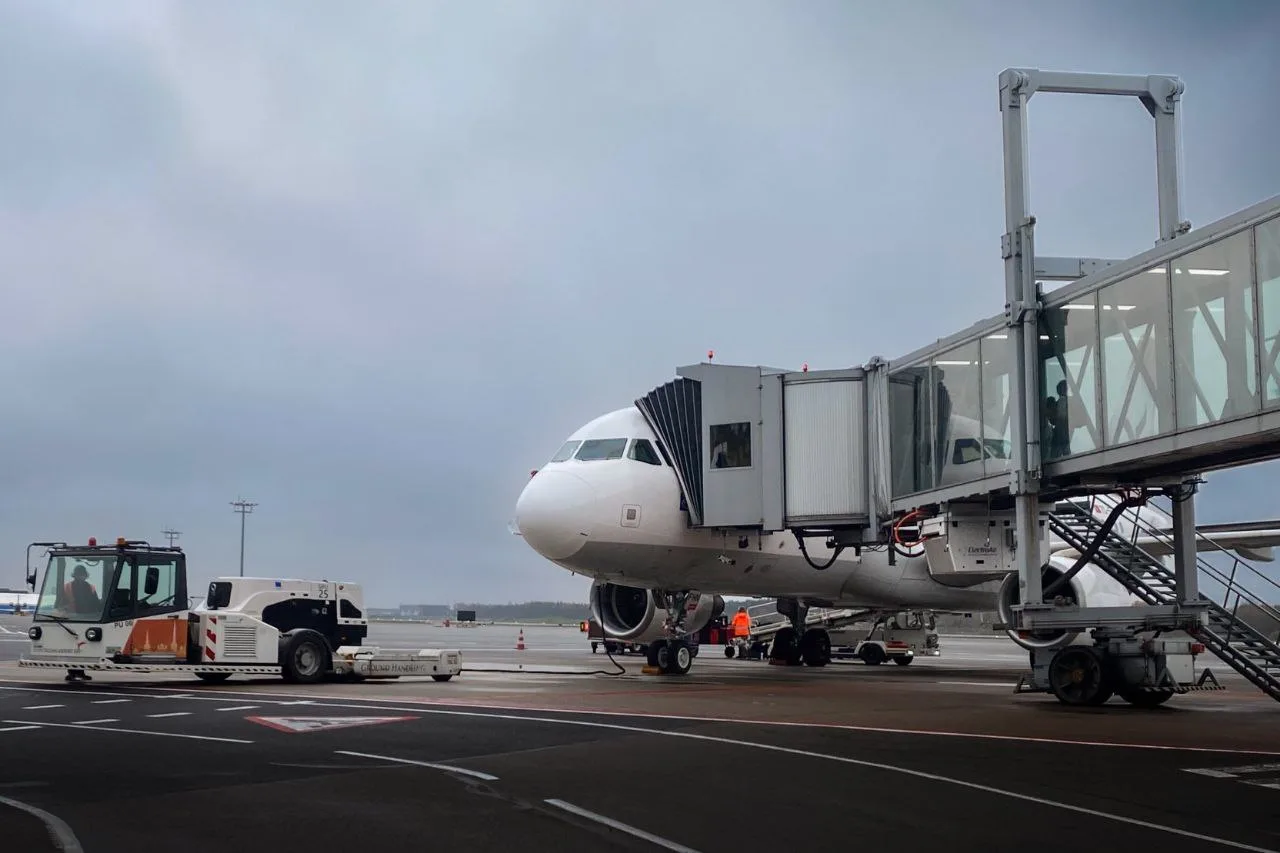
Ground Handling 2026: Action Checklist for Airports & Handlers
To turn these trends into concrete results, airports and ground handling companies can focus on a few practical steps:
- Audit your apron energy ecosystem – map every power source, GPU, PIT and PCA unit, and identify diesel hotspots.
- Align with global standards – ensure procedures and equipment match the latest industry manuals and safety best practices.
- Prioritise data connectivity – choose GSE and infrastructure that can share real-time data with your operational systems.
- Build an electrification roadmap – plan charging infrastructure, grid capacity and hybrid solutions for the next 5-10 years.
- Invest in people – reskill technicians and ramp staff for electric and digital systems, and reinforce safety culture.
- Design for resilience – favour modular, redundant architectures that can adapt to future traffic and technology changes.
Whether you operate a major hub or a regional airport, the core questions are the same:
How will we power our aircraft on the ground? How will we keep people and equipment safe? And how will we ensure that each turnaround in 2026 is cleaner, smarter and more efficient than it is today?
Planning your ground power and GSE strategy for 2026?
ElectroAir works with airports, airlines and ground handlers worldwide to design integrated ground power infrastructures, from PIT systems and bridge-mounted GPUs to hybrid energy solutions and digital monitoring.
If you are reviewing your apron or hangar upgrade plans, our engineering teams are ready to help.
*This article is intended as an industry overview. Product examples are illustrative; specific ground handling strategies should always be tailored to the local airport environment, traffic mix and regulatory framework.*